
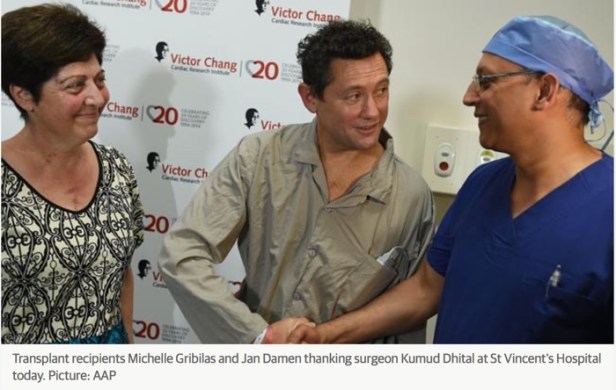
In a world first, doctors at St Vincent’s Hospital have managed to transplant a heart that had stopped beating.
The donor heart wasn’t beating for up to 20 minutes before it was resuscitated and successfully transplanted.
The heart was brought back to life, then placed on a machine, before it was injected with a ground breaking preservation solution – developed by the Victor Chang Cardiac Research Institute and St Vincent’s Hospital.
It’s believed 30 percent more lives will be saved using this new technique.
The Preservation Solution:
- Reduces the amount of damage to the heart
- Makes the heart more resilient to transplantation
- Reduces the number of heart muscle cells that die
- Improves heart function when it is restarted
- Limits damage from a lack of oxygen
- The preservation solution took 12 years to perfect
Why this is so ground breaking
Until now, Transplant Units have solely relied on donor hearts from brain-dead patients whose hearts are still beating. The new technique now allows doctors to transplant hearts that have stopped beating.
This represents a paradigm shift in organ donation and will result in a major increase in the pool of hearts available for transplantation.
How they did it
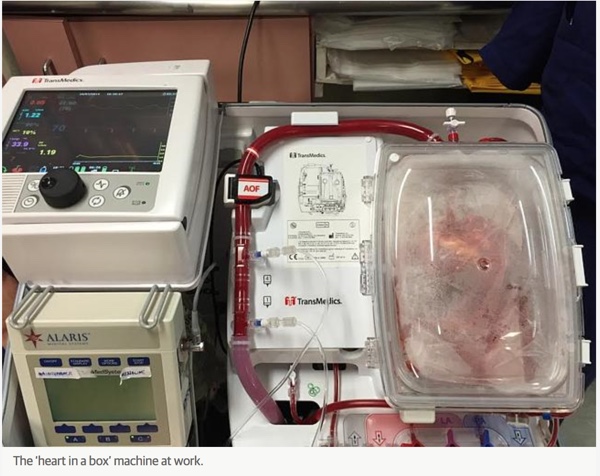
A surgical team at St. Vincent’s Hospital in Sydney took a non-beating donor heart and revived it in a machine called a “heart-in-a-box,” BBC News reported.
In this device, the heart is kept warm and bathed in a nutrient-rich fluid that helps minimize any damage to the cardiac muscle.
Michelle Gribilas, 57, suffered from congenital heart failure and was the first person to receive such a heart. She told the BBC, “Now I’m a different person altogether. I feel like I’m 40 years old — I’m very lucky.”
Two more successful non-beating heart transplants have followed her case, the hospital said.
Experts believe the “heart-in-a-box” technique, also known as machine perfusion, might lead to a 30 percent increase in the availability of a variety of organs for transplant.
“This breakthrough represents a major inroad to reducing the shortage of donor organs,” Peter MacDonald, head of the heart transplant unit at St. Vincent’s, told the BBC.
Last Updated: Oct. 27, 2014
 Health Aware